
Restaurant Website Cost UK: £79/mo to £10,000 (2026)
How much does a restaurant website cost in the UK in 2026? Real prices: £79–£200/mo or £1,500–£10,000 one-off — DIY, freelancer and agency compared.

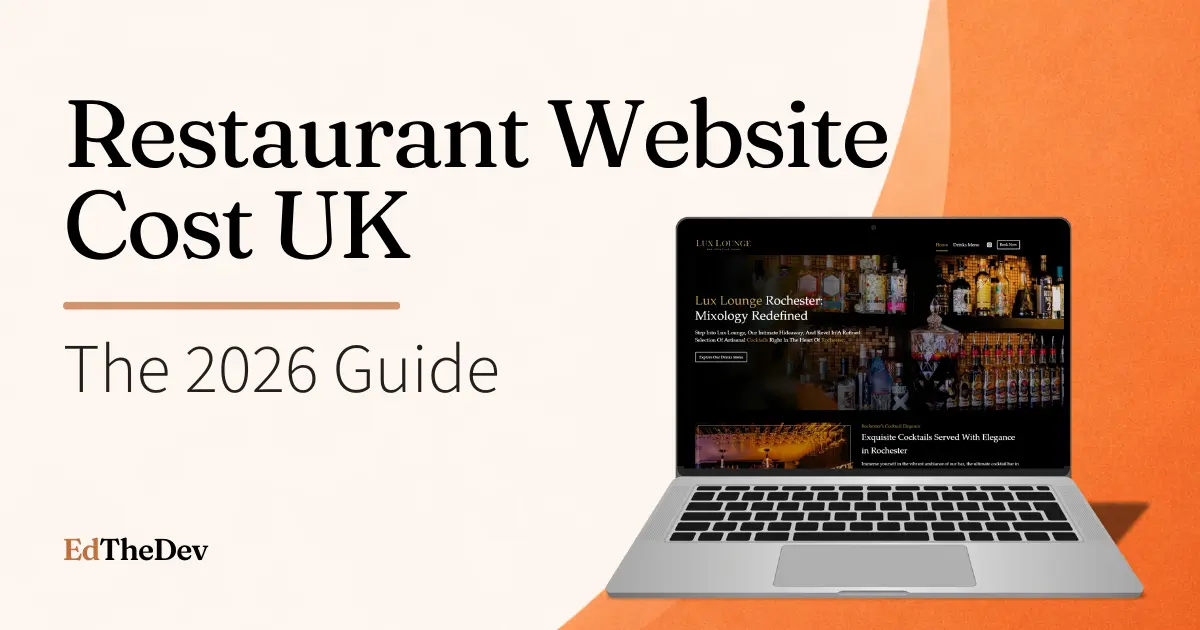
A professional restaurant website in the UK typically costs £1,500-£5,000 one-off or £79-£200/month on a subscription model. The 'right' price depends on what you need.
If you’re researching restaurant website cost UK prices, you’ve probably noticed they vary wildly. One quote says £500, another says £15,000. What’s going on?
I’ve been building websites for over 10 years, with the last 5 focused specifically on restaurants, pubs, and cafés across the UK. In this guide, I’ll break down exactly what a restaurant website costs, what affects the price, and how to avoid overpaying.
Not a restaurant? See our complete UK website cost guide for general pricing across all business types.
Table of Contents
- The Real Cost Breakdown
- What Affects the Price
- Your Three Options
- Hidden Costs to Watch For
- What’s Included (And What Isn’t)
- How to Save Money
- Is It Worth the Investment?
- Frequently Asked Questions
The Real Cost Breakdown
A restaurant website in the UK costs £1,500–£5,000 as a one-off build, or £79–£200/month on a subscription that bundles hosting, updates and support. Freelancers sit at the lower end; agencies and custom booking or online-ordering features push toward the top. Here are the honest numbers for 2026:
One-Off Payment Model
| Type | Price Range | Best For |
|---|---|---|
| DIY Website Builder | £0-£300/year | Very tight budget, tech-comfortable |
| Freelancer | £800-£3,000 | Simple sites, flexible timeline |
⚠️ Warning: The cheapest option isn’t always cheapest long-term. See Hidden Costs of Cheap Websites before choosing based on price alone. | Specialist Agency | £3,000-£10,000 | Premium design, complex features | | General Agency | £5,000-£20,000+ | Large chains, custom systems |
Monthly Subscription Model
| Type | Price Range | What’s Included |
|---|---|---|
| Basic Package | £50-£100/month | Hosting, simple design, basic updates |
| Professional Package | £100-£200/month | Custom design, booking integration, ongoing support |
| Premium Package | £200-£400/month | Advanced features, priority support, marketing |
The subscription model is becoming more popular because it spreads the cost and includes ongoing maintenance. A one-off site often needs expensive updates within a year or two.
📖 Related: Website Monthly vs One-Off Payment: Which Is Better? — detailed comparison of both payment models.
Not sure what features you actually need? See our guide to essential restaurant website features for a breakdown of must-haves vs nice-to-haves.
What Affects the Price
Not all restaurant websites are created equal. Here’s what moves the needle on price:
1. Design Complexity
A template-based design costs far less than a fully custom design. Most restaurants don’t need bespoke design — a well-customised template looks just as professional.
What matters most is that users can quickly find what they need. Fancy animations rarely improve bookings.
Cost impact: Custom design adds £1,000-£5,000
2. Number of Pages
A simple 5-page site (Home, Menu, About, Contact, Reservations) costs less than a 15-page site with separate pages for events, private dining, gift vouchers, and a blog.
Cost impact: Each additional page adds £50-£200
3. Booking System Integration
Connecting to ResDiary, OpenTable, or SevenRooms requires technical work. Some developers charge extra for this.
Cost impact: Integration adds £200-£500
4. Online Ordering
If you want customers to order takeaway directly through your site (avoiding Just Eat’s 15-35% commission), expect to pay more. Many restaurants are moving to direct ordering to keep more of each sale.
The maths is simple: if you’re doing £5,000/month through delivery apps at 30% commission, that’s £1,500/month in fees. Your own ordering system might cost £2,000 to set up but pays for itself quickly.
Cost impact: Online ordering adds £500-£2,000
5. Photography
Professional food photography makes a massive difference but isn’t always included. Some agencies include a photoshoot; most don’t.
Cost impact: Professional photography adds £300-£800
6. Content Writing
Will you write the website copy yourself, or do you need it written for you? Good copywriting takes time.
Cost impact: Copywriting adds £200-£600
7. Ongoing Maintenance
Websites need updates, security patches, and occasional fixes. Factor this into your budget.
Cost impact: Maintenance costs £30-£100/month or £300-£800/year
Need a quick estimate? If you’d rather skip the research and get straight to what your specific situation would cost, book a free 30-minute call and I’ll give you an honest answer.
Your Three Options
Let me break down the three main routes, with honest pros and cons:
Option 1: DIY with Website Builders
Examples: Wix, Squarespace, WordPress.com
Cost: £0-£25/month plus your time
Pros:
- Cheapest option
- Full control
- Can start immediately
Cons:
- Time-consuming (expect 20-40 hours to do it properly)
- Results often look “template-y”
- You handle all technical issues
- Limited booking integrations
- SEO requires extra learning
Best for: Owners who are tech-comfortable and have more time than money.
Honest take: Most restaurant owners I speak to tried DIY first, then came to me 6 months later frustrated with the results. Your time has value — if you’re spending evenings wrestling with website builders instead of running your restaurant, the “free” option isn’t actually free.
📖 Related: Wix vs Squarespace vs Web Designer: Which Is Best? — full comparison of DIY vs professional options.
Option 2: Hire a Freelancer
Cost: £800-£3,000 one-off
Pros:
- More affordable than agencies
- Personal service
- Flexible and negotiable
Cons:
- Quality varies massively
- May disappear after the project
- Limited ongoing support
- You often get what you pay for
Best for: Simple sites when you’ve found a freelancer with good reviews and hospitality experience.
Honest take: The freelancer market is a lottery. I’ve seen brilliant work from freelancers and absolute disasters. Always check their portfolio for restaurant-specific work, read reviews, and ask what happens if something breaks in 6 months.
Option 3: Work with a Specialist
Cost: £3,000-£10,000 one-off OR £100-£200/month
Pros:
- Professional results
- Hospitality-specific experience
- Ongoing support included
- Booking system expertise
- Better SEO out of the box
Cons:
- Higher upfront cost
- May have waiting lists
Best for: Restaurants serious about online bookings and willing to invest in quality.
Honest take: This is where I operate. It costs more upfront, but you get someone who understands restaurant-specific challenges: integrating with booking systems, making menus easy to update, handling seasonal changes, and actually answering the phone when something goes wrong.
I specialise in restaurants, pubs, and cafés — you can see my packages and pricing to get a sense of what’s included.
Hidden Costs to Watch For
Here’s where people get caught out:
Domain Name
Your website address (yourestaurant.co.uk) costs £10-£20/year. Some builders include this; many don’t.
SSL Certificate
The padlock that makes your site secure. Should be included (and is legally required for taking payments), but some cheap providers charge extra.
Hosting
Where your website lives. Costs £5-£30/month depending on quality. Cheap hosting = slow website = lost customers.
Email Setup
Professional email addresses (hello@yourestaurant.co.uk) often cost extra. Google Workspace starts at £5.90/month per user and includes Gmail, Google Drive, and Calendar — it’s what I recommend for most restaurants.
Need help? I set up professional email for all my website clients at no extra charge.
Future Updates
“Can you just add a new menu page?” — this is where one-off projects get expensive. Each change might cost £50-£150 if you’re paying hourly.
Renewal Fees
Some builders and agencies have low first-year prices that jump significantly at renewal. Always ask about year 2+ pricing.
What’s Included (And What Isn’t)
Before signing anything, clarify exactly what you’re getting:
Should Be Included
- Mobile-responsive design
- Basic SEO setup
- Contact form
- Google Maps integration
- SSL certificate
- 1-2 rounds of revisions
- Training on how to request updates
Often Costs Extra
- Professional photography
- Copywriting
- Booking system integration
- Online ordering
- Multiple languages
- Blog setup
- Social media integration
- Ongoing updates and maintenance
Red Flags
- No clear pricing (hourly “estimates” can spiral)
- No portfolio of restaurant work
- Ownership unclear (some agencies keep ownership of your site)
- No mention of ongoing support
- Pressure to decide immediately
How to Save Money
Want a professional site without overspending? Here’s what I tell clients:
1. Start With What You Need
You don’t need every feature on day one. Start with a solid 5-page site and add features later.
2. Provide Your Own Content
Write your own about page, gather your menu details, take decent photos on your phone. The more you provide, the less work for the developer.
3. Use Existing Booking Systems
If you already use ResDiary, OpenTable, or SevenRooms, integrating with that is cheaper than building custom booking functionality. Most good developers can connect these within a few hours.
4. Choose Subscription Over One-Off
Spreading the cost over monthly payments often works out better for cash flow, and maintenance is included.
5. Avoid “Cheap” Options
This sounds contradictory, but the £500 website that doesn’t bring in bookings costs more than the £3,000 website that does. Think return on investment, not just cost.
Is It Worth the Investment?
Let’s do some quick maths — because “worth it” depends entirely on your situation.
The average restaurant booking is worth £50-£150. A website that brings in just 2 extra bookings per week pays for itself. That’s the baseline calculation, but the real value goes deeper.
I recently worked with Luigi’s Italian Restaurant in Sandwich, Kent (I offer web design services across Kent). Their old website was slow, had no booking integration, and the menu was an unreadable PDF.
After launching their new site:
- Significant increase in online bookings
- Over 1,100 website visits per month on average
- Built a mailing list of 380+ subscribers
- They ranked on page 1 for “Italian restaurant Sandwich Kent”
- Menu changes now take 5 minutes instead of requiring a designer
The investment paid for itself quickly through increased bookings and a growing customer database.
Beyond Direct Bookings
A good website also saves you time:
- Fewer phone calls answering basic questions (opening hours, menu, location)
- Easier staff management when your booking system syncs with your diary
- Simpler menu updates without calling a designer every time prices change
- Better data on where your customers come from
One owner told me she was spending 3 hours a week just answering calls about opening times. Her new website with clear information and online booking cut that to nearly zero.
The real question isn’t “can I afford a website?” — it’s “can I afford to lose bookings to competitors who have better websites?”
Next Steps
Getting a restaurant website doesn’t have to be complicated or expensive. The key is finding someone who understands hospitality and offers transparent pricing. Need help choosing? Our guide to hiring a web designer in Kent covers what to look for and what to avoid.
If you’re looking for a straightforward, professional website without the agency markup, I’d be happy to chat. I work specifically with restaurants, pubs, and cafés across the UK — everything included, no surprises.
Frequently Asked Questions
Related Articles

How to Build a Restaurant Website in 2026 (Step-by-Step)
Build a restaurant website that drives bookings: menus, booking integration, SEO and design covered. DIY vs hiring a pro, with 2026 costs compared.

Wix vs Squarespace vs Web Designer: Which Is Best?
Wix vs Squarespace vs hiring a web designer for your restaurant: real 2026 costs, time required and honest pros/cons. See which option fits your budget.
11 Restaurant Website Features That Drive Bookings
The 11 must-have restaurant website features for 2026 — plus 5 popular ones wasting your money. Covers menus, booking, mobile design and pub-specific needs.
Ready to get started?
Get a professional website that actually brings in customers — design, hosting, and support all included.